
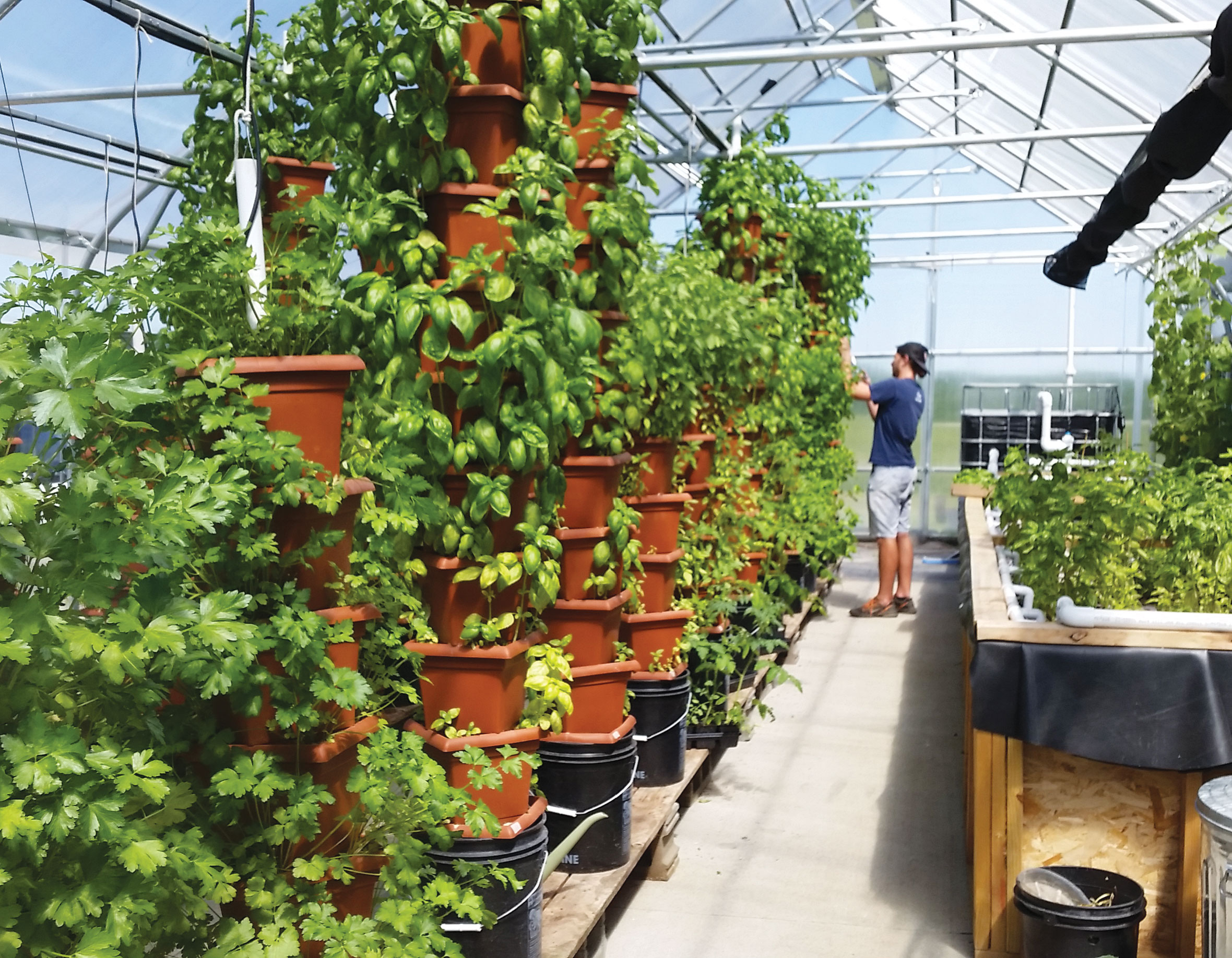
A hydroponic tower removes two of the primary constraints facing rooftop growers in Canada: soil weight and growing season length. With no growing medium heavier than the water in the reservoir and the option to move the system indoors during hard frost periods, tower hydroponics is one of the most flexible formats available to urban growers from Halifax to Edmonton. The trade-off is a higher upfront cost and a steeper learning curve than raised beds — both manageable once the system logic is understood.
How Vertical Tower Systems Work
Most commercial and semi-commercial vertical towers use one of two core nutrient delivery approaches: nutrient film technique (NFT) or the Kratky passive method adapted for towers. In NFT towers, a small submersible pump circulates a thin film of nutrient solution from a reservoir at the base up through a central channel to the top of the tower, where it flows down across the root zones in each growing pocket and returns to the reservoir. The plant roots stay in the flowing film without being fully submerged.
The Kratky adaptation suspends plant net cups partially above a static nutrient reservoir, allowing an air gap to form as the solution is consumed — roots feed from below and breathe from above. This approach requires no pump or electricity, which makes it attractive for off-grid or rooftop situations where power access is limited, but the static solution needs more frequent monitoring for dissolved oxygen and pH drift.
System Components and Approximate Costs (2025–2026 Canadian Market)
- Tower structure: PVC pipe towers (DIY, approximately $40–80 per 1.8 m tower) or commercial food-grade HDPE towers ($180–350 per tower from Canadian suppliers including GreenStalk alternatives produced domestically)
- Reservoir: 25–75 L food-grade container; standard Rubbermaid totes work at the lower cost end ($15–30)
- Pump: 400–800 L/hr submersible pump, $20–45; timer to cycle on 15 min per hour, $10–20
- Nutrient solution: Two-part or three-part concentrate; General Hydroponics Flora series, widely available across Canada, approximately $35–60 for a starter set that covers 200+ litres of solution
- pH and EC meters: A reliable pH pen and EC (electrical conductivity) meter are not optional — budget $40–80 combined for entry-level units that hold calibration reasonably well
- Grow lights (indoor/winter operation): Full-spectrum LED bars, 100–200W per tower group, $120–250 per fixture; this is the single largest cost factor for indoor winter operation
Nutrient Management
Hydroponic nutrients are dissolved mineral salts — no soil biology is involved in making them available to roots, which means deficiencies appear faster than in soil but are also correctable faster. The key measurements are:
- pH: Target 5.8–6.2 for most vegetables and herbs. Outside this range, nutrient lockout occurs even when the correct minerals are present. Canadian tap water typically arrives at pH 7.0–8.0; pH-down (phosphoric acid solution) brings it into range.
- EC (electrical conductivity): A proxy for total dissolved nutrient concentration, measured in mS/cm. Seedlings and leafy greens run at 1.2–1.8 mS/cm; tomatoes and peppers at 2.5–3.5 mS/cm. Canadian municipal water has baseline EC of 0.1–0.5 mS/cm depending on the city — Vancouver's soft water at ~0.1 mS/cm allows more precise nutrient targeting than Calgary's harder water at ~0.4 mS/cm.
- Water temperature: Root zone temperature between 18–22°C is optimal. On uninsulated rooftops in summer, reservoir temperatures can climb to 26°C or above, accelerating bacterial growth and reducing dissolved oxygen. White reservoir covers and insulation foam strips extend the safe operating range significantly.
A complete reservoir flush and refill every 10–14 days is the single most reliable maintenance practice for beginners. It prevents nutrient salt buildup, resets pH drift, and catches any root disease before it spreads.
Crop Selection and Yields
Leafy greens produce the fastest and most reliable returns in tower systems: butterhead lettuce from transplant to harvest in 28–35 days, baby spinach in 21–28 days, basil in 30–40 days. Herbs — cilantro, dill, mint, chives, parsley — perform well and produce continuously under a cut-and-come-again harvest schedule. Strawberries are the most productive fruiting crop in a tower format; a six-tower system with 54 plants typically yields 1.5–2.5 kg of berries per week during peak production.
Tomatoes and cucumbers require tower designs with larger growing pockets (net cups 75 mm or above) and staking support. Cherry tomato varieties (Sungold, Supersweet 100) are more suitable for towers than beefsteak types. Root vegetables are not practical in standard tower configurations.
Winter Operation in Canada
Most rooftop tower systems in Canada move indoors or under a cold frame structure between November and March in Zones 3–5. In Zone 8 (coastal BC), outdoor tower operation is possible year-round with frost protection on the reservoir. Key winter considerations:
- At temperatures below 4°C, nutrient solution viscosity changes and pump output drops; at below –2°C, PVC and HDPE towers can crack if solution freezes inside
- Indoor operation under LED grow lights requires approximately 14–16 hours of light per day for leafy green production
- Electricity cost for winter indoor operation: a modest two-tower setup with a 150W LED fixture running 15 hours/day costs approximately $18–28/month at average Canadian residential rates ($0.12–0.18/kWh)
- Ventilation matters indoors — towers raise humidity in enclosed spaces; a small fan preventing stagnant air is sufficient for a basement or sunroom setup
Comparing NFT Towers to Aquaponic Towers
Aquaponic systems — combining fish tanks with hydroponic growing — have gained popularity in urban rooftop contexts because fish waste supplies nitrogen, reducing purchased nutrient inputs. The complexity is considerably higher: fish health, ammonia cycling, and the interdependence of two living systems mean that a mistake affects both the fish and the plants simultaneously. For a first hydroponic setup, straight NFT or static Kratky systems with commercial nutrient solution are more forgiving and easier to troubleshoot. Aquaponics makes more sense after at least one full growing cycle on a conventional hydroponic system.
Further Reading
The USDA National Agricultural Library's hydroponics section maintains a curated reading list on NFT and DWC systems. General Hydroponics publishes free nutrient feeding charts indexed by crop type and system — a practical reference for solution mixing.